- The Case for Brand
- Posts
- What Hotelier Ari Heckman thinks about building brand worlds IRL
What Hotelier Ari Heckman thinks about building brand worlds IRL
If you thought the Ace was cool, wait til you see Ash
I chatted with Ari Heckman about Ash, building brand worlds in boutique luxury hotels, and running a creative business
👋 Hi, I'm Amanda. I'm a brand strategist and fractional CMO. I help founder-led businesses turn belief into brand—and brand into a strategic asset that works as hard as you do. I share weekly deep dives with actionable advice on brand building—plus interviews with the people in the trenches. I also work 1:1 with founders and teams. Book a chat here.
Who will love this
Boutique hotel lovers
Frequent flyers
Anyone running a creative business
Today
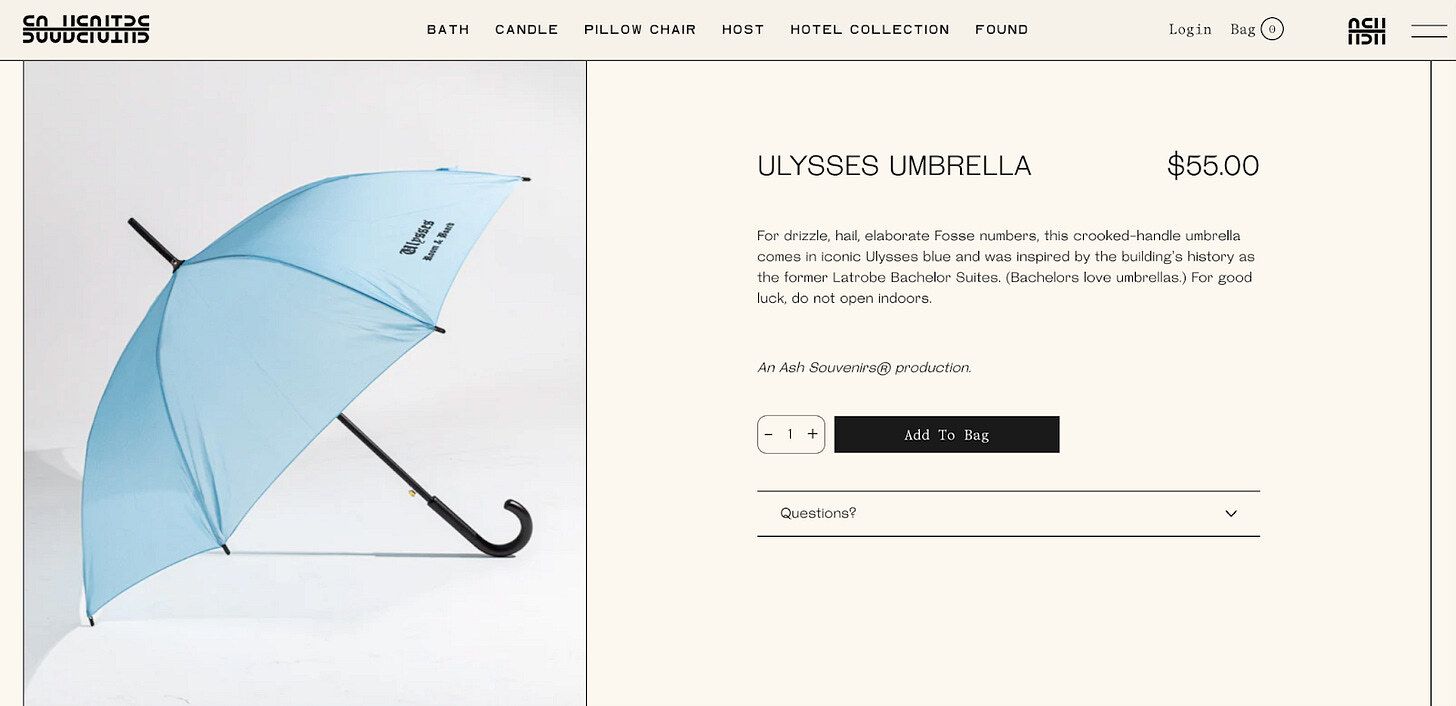
A few months ago, while working on a hotel brand, I stumbled upon this umbrella for Ulysses hotel. That discovery sparked a deep dive into Ash Hotels, and a trip down the rabbit hole of not one but five hotel brands, each with their own brand world:
Ash approaches hotel creation differently from most studios. As their website puts it: “The spaces we invent are cinematic monuments to the best of the old world, made suddenly new again.”
What’s really interesting to me is how Ash operates. They’re not just a design studio—they manage hotels, create programming and develop furniture and products. I reached out to Ari to learn more, and our conversation didn’t disappoint. Creative businesses are tricky beasts, but Ari balances the left/right brain demands of creative vision and business sense with ease.
I really enjoyed this conversation and hope you do too.
Amanda
This conversation has been lightly edited for clarity.
Amanda Gordon: Hey Ari! I'd love to just hear a little bit about Ash.
Ari Heckman: God, I could talk forever about this, but I’ll try to keep it brief. I think it’s important to start by saying that we didn’t set out to be a specific type of company. Sometimes that works to our detriment, and sometimes to our benefit. We didn’t go into business saying, “We’re a hospitality company” or “We’re a real estate development company” or even “We’re a design studio.” The company really began as an organic extension of my own interests and my internal struggle with being both left-brained and right-brained.
I realized I didn’t have to choose—I wanted to figure out how to mediate those two sides in a way that produces cool things that actually work. Too often, industries are polarized: things are either purely creative, detached from economic incentives, or purely capitalistic, which can feel soulless and built not to last. I’m fascinated by that liminal space between art and commerce, and that’s been such a defining aspect of my career and the DNA of the Ash brand, if that makes sense.
Amanda Gordon: Absolutely. You’re preaching to the choir. I’m really interested in that left-brain, right-brain connection, and the intersection of art and commerce. When I look around at incredible design studios, I often notice this mindset of being “artists” who are always chasing the next project. It’s hard to create sustainably when you’re stuck on that hamster wheel.
Ari Heckman: Exactly. Another defining aspect of Ash is that we’ve always been hesitant to operate solely as a for-hire service provider. I believe in having deeper ownership or involvement in a project—it doesn’t mean we have to be the sole owner, but when you combine holistic creative control with the vision and rationale behind a project, the outcome is completely different.
When you’re brought in as a hired hand to do aesthetic window dressing, you miss that connection. Don’t get me wrong—there are plenty of successful projects done that way, and not every project we do is super successful either. But I’m interested in collapsing the relationship between owner and designer. That’s been a big focus of our work.
Amanda Gordon: That’s so interesting. Creative leadership can drive tremendous business results, but too often, creatives are limited to a narrow role in the business.
Ari Heckman: Exactly—and sometimes, creatives limit themselves. They don’t give themselves permission to be in the driver’s seat or make decisions. My grandfather, who was an architect and a huge role model for me, used to joke, “Don’t be the architect; be the owner, the developer. Then you can decide if you want to be the architect or designer.”
I definitely internalized that, although it’s harder than he made it sound. That mindset really set the trajectory for Ash. When we stumbled into hospitality—designing and then operating hotels—it wasn’t something we had initially planned. But as much as hospitality is now a core part of what we do, I don’t want Ash to be pigeonholed as just a hotel brand.
There’s a lot of pressure to create clarity for consumers, so they know exactly what you do. But I think what makes a hotel brand truly interesting is operating more like a lifestyle brand. I know “lifestyle brand” is an overused buzzword, but the idea is that while people might know us for our hotels, they could also interact with us by buying our soap, participating in vintage furniture drops, or one day watching a film we produce.
That studio model—pushing all the frontiers of creative enterprise—is something I find really compelling.
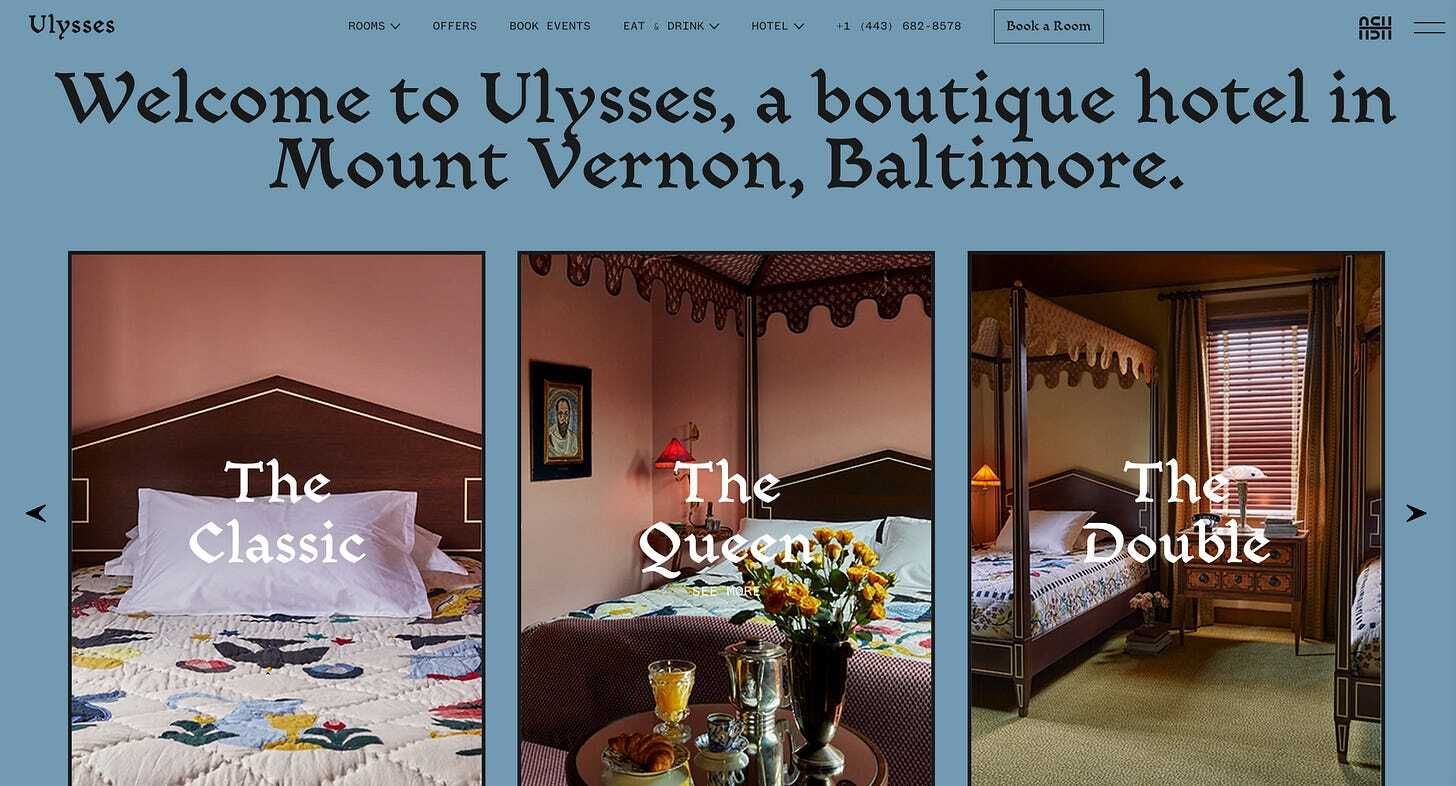
Amanda Gordon: Absolutely. The way you describe it, and the way Ash’s website frames “worlds” and “cinema,” it really supports that lifestyle and world-building approach, which can apply across so many sectors. If you can share, I’d love to hear more about how the model works—how you connect services, operations, and product sales.
Ari Heckman: Honestly, we’re still figuring that out. If I’m being candid, a lot of what we’ve done over the years—both for better and worse—has been driven by instinct. It’s like, “Oh, that sounds fun, let’s do it,” without necessarily building a model or budget to figure out exactly how it works.
That approach has been both a blessing and a curse. On the one hand, it’s enabled us to pursue some wild, creative ideas that we might not have done otherwise. On the other hand, there have been times where we’ve overextended ourselves or looked back and thought, “Why did we pursue that idea?”
We saw the first hotel as a real estate opportunity that we designed and developed. We raised the money for it, collected some fees to support our small team at the time, and essentially owned the project. In 2014, as we were preparing to open the hotel, we started meeting with potential operators since we had no experience operating a hotel. We couldn’t find anyone who aligned with the kind of experience we wanted to create.
Initially, we even thought the hotel might become an Ace Hotel, but the economics didn’t work given the size of the property. So, we decided to do it ourselves. Fast forward 10 years, and now, six or seven hotels later, we’ve developed an economic model where we’re involved in the development and design side. For all of our deals to date—and likely most of our future deals—we collect design and development fees, asset management fees, and standard management fees once the hotel is operational.
We’re at an interesting inflection point now because we’ve built our management team and capabilities ahead of what our hotel management revenues can support. We’re essentially investing in the future growth of the business, with the expectation that it will scale. We’re also starting to have conversations with investors who are interested in investing in the Ash brand and management company, separate from the individual real estate deals.
So, that’s a new chapter for us. We haven’t taken outside investment yet, but these conversations would help us stabilize the business without deficit funding while we grow toward sustainability. In hospitality, the general rule of thumb is that you need about 1,000 rooms under management to generate enough revenue to support a fully staffed management company.
Amanda Gordon: That’s fascinating. I hadn’t heard that rule of thumb before. It sounds like a unique journey—definitely not your standard design studio!
Ari Heckman: Exactly. One of our challenges is not being boxed into one thing. Depending on how someone first encountered us, Ash can be perceived as a staging company, a hotel company, or a design studio. It can be frustrating because we want people to understand the full scope of what we do. But we’ve also set ourselves up for that perception.
Amanda Gordon: I get that. There’s beauty in the ambiguity—it attracts the right creative minds—but I can see how investors might prefer more clarity.
Ari Heckman: Totally. During COVID, we decided to put our hospitality business front and center, with the hotel brand leading the way. That said, people still carry whatever their first impression of us was, which takes time to shift.
Amanda Gordon: What does your team look like to manage all these different services?
Ari Heckman: The way it most neatly breaks down is there are three main teams, though there's definitely some crossover. Not everyone fits perfectly into a bucket, but here’s the gist:
First, there’s the Opco team, or the management team. They operate our hotels on a corporate level—handling things like sales, marketing, HR, and finance. These are the people keeping the lights on day-to-day, working closely with the teams at each specific property, and overseeing brand implementation on-site. For example, deciding what events we’re hosting that align with Ash’s brand goals and vision. Brand is such a sensitive, fragile thing. If you mess it up—even slightly—you can really undermine your value proposition. I’m very attuned to making sure everything we put into the world feels on-brand. That doesn’t mean we’re rigid—our brand is dynamic, it’s not just one font—but if something feels “not Ash,” then it’s a problem. I’d say a couple of people on my team and I are probably the only ones who can truly define what that means. It’s hard to articulate but critically important.
Second, we have the design, development, and investment team. They’re working on new deals, ensuring the financial models make sense, and managing the design and development process. This involves everything from the creative vision and programming to collaborating with local architects, engineers, and contractors to bring these projects to life. Once their work is done, the project is handed off to the Opco team.
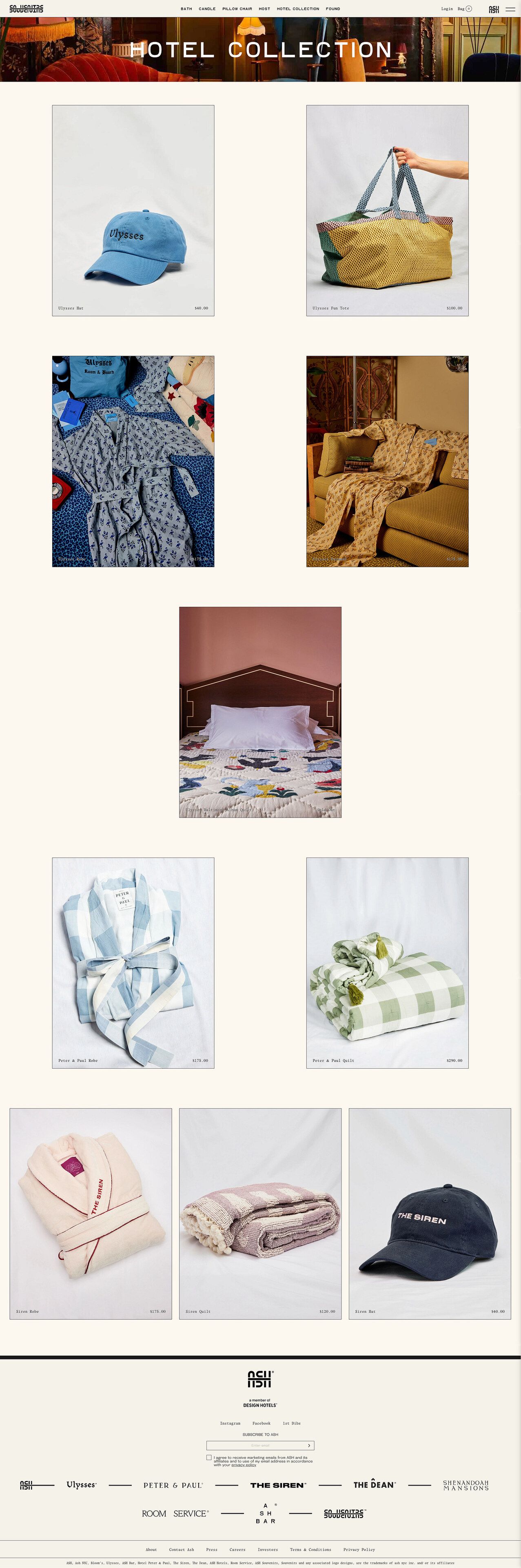
The third bucket is our separate business historically called Ash Staging, but it's evolving into a new entity called Room Service. It’s a bit tongue-in-cheek, nodding to our hospitality experience. This is a holistic furnishing solution for a variety of clients. It started as a real estate staging business but has expanded into hospitality projects and even institutional work. Basically, it’s for anyone who needs professional furniture solutions but doesn’t want to rely on an interior designer who may lack the operational capabilities we bring to the table.
Amanda Gordon: Awesome. And maybe a good follow-up question: What does your day-to-day look like across all those teams?
Ari Heckman: God, it’s chaotic. It really depends on the day. I was joking with someone recently that I’ve set myself up for a pretty schizophrenic life—jumping from one problem to another. I’m deeply involved in all the businesses. One of my New Year’s resolutions is to figure out what I actually want to be doing. It’s easy to fall into patterns without reassessing them. So I can’t say what I’m doing now is necessarily what I’ll be doing in five years. I’m at a point where I want to focus on the things I truly enjoy, but it takes a lot of time and energy to get there.
Right now, it’s a lot of managing people, pushing projects and initiatives forward—some short-term, some long-term. You have to be patient. Even though we started over 15 years ago, in some ways, it feels like we’re still in our adolescence. Like with a human child, this is a critical juncture. The next three to five years will determine what kind of “adults” these businesses grow up to be.
Amanda Gordon: Yeah, totally. As you were talking, it made me think about Richard Christiansen from Flamingo Estate.
Ari Heckman: Oh yeah, Richard. He’s an old friend. He used to run the branding agency Chandelier Creative, which we’ve worked with before. They actually did the branding for Ulysses and some work for Ash as well. Richard’s story is fascinating. If you haven’t met him, he’s definitely someone worth interviewing.
What’s so compelling about his story is that he was always a visionary, creating brands and systems for other people. He worked with a wide variety of clients—some who embraced the ideas and others who ignored or dismissed really good work. Founding Flamingo Estate was his way of asking, “Why am I creating all this value for others when I could do it for myself?” Flamingo is the extension of a brand creator. He essentially reverse-engineered a business because of his love for creating brands. It’s such a cool story.
Amanda Gordon: Yeah, that’s a great point. I’ve read a bit about his journey, and it’s so inspiring. I think it’s a common ambition for creatives—at least the ones I admire. There’s a moment when you realize, “We can do this, but we’re not calling the shots.” What advice would you give to creatives who straddle that left-brain/right-brain thinking and want to create something of their own?
Ari Heckman: Yeah, I think that’s a really good question. Let me think about it for a second. You know, I think, like so many things, there's a balance to strike. On one hand, you shouldn’t get too bogged down in the details or over-plan. When we got into the hotel business, for example, we didn’t have a background in hospitality design or come from a big hotel company. That lack of experience actually led us to approach things differently—sometimes unconventionally—and that resonated with people. It’s similar to Ian Schrager’s story of inventing the boutique hotel. He broke all the “rules” of the industry, and in doing so, created an entirely new genre. So, being iconoclastic and comfortable with that is really important.
But on the other hand, you do need someone—whether it’s you or a partner—who is more grounded and operationally focused. You can’t just be all vision. You need a balance between having your head in the clouds and your feet firmly on the ground. Whether it’s your own feet or some scaffolding in the form of a great team, that balance is critical.
Amanda Gordon: Totally, yeah. I could talk for hours about creative partnerships. It’s always fascinating to meet the people behind brands and see the dynamics at play. One pairing I often notice is the visionary and the operator, who’s often content to stay behind the scenes. Sometimes it’s one person doing both, but more often, it’s a team effort.
Ari Heckman: Absolutely. I wish I were naturally great at the operational side, but that’s not my strength. I’d rather avoid spreadsheets altogether if I could. That said, you have to learn those skills and be fluent enough in them to run a business effectively. Some of the biggest mistakes I’ve made in hindsight were when I got too detached, thinking, “Oh, that’s being handled,” and trusting it would be fine. When things slip through the cracks, it’s a problem.
Amanda Gordon: Yeah, totally. Here’s a bit of a controversial question—does your team work remotely? And do you think creativity can happen remotely?
Ari Heckman: It depends. On the Opco side—our hotel operations team—they’re scattered and always have been. Even before COVID, we never had a centralized Opco team. When your hotels are spread out, it’s not necessary for roles like HR, revenue management, or corporate sales to be in the same room. Could there be some benefits? Sure. But it’s not required.
For the creative team, though—my core team of four or five people at the intersection of interior design, architecture, and branding—I do think being together is essential. Right now, we’re living through a bit of a test case. Our office in SoHo has been our home for five years, but the landlord decided to do something else with the building. We had to move out of one floor while waiting for a new space. Since October, the creative team has been working from home, and it’s been disruptive. They’ve done a great job of adapting by meeting a few times a week at someone’s house or on the other floor, but it’s not the same.
It’s been disruptive, to say the least. Many people in New York live in small spaces or with roommates, so the office is often their reprieve. The team has been making do by meeting a few days a week at someone’s house or on the remaining office floor, but it’s not ideal. That alchemy you get when smart, creative people work together is hard—if not impossible—to replicate remotely.
Amanda Gordon: Yeah, I completely agree. It’s hard to put into words until you see it happen. I’ve tried to keep an open mind about whether creativity can happen remotely, but it’s tough to replicate that dynamic energy.
Ari Heckman: Exactly. I’m not saying everyone needs to be together all the time. There are ways to make remote work more effective, but without some system in place for bringing people into the same room regularly, I don’t see how it truly works.
Amanda Gordon: OK - final question to round this out—what’s your dream brief?
Ari Heckman: Wow, I don’t even give myself permission to think about that. I have so many! I mean, let me answer it a few ways. One is that being in the trenches of creating a brand wasn’t something I necessarily set out to do or had ambitions for, but it’s really fun and fascinating. I want to put myself in a position to focus more on that. In some ways, it’s been not an afterthought, but it happened kind of accidentally. There’s never enough time or money to invest in it proactively, so I really want to get to a place where I can do that. I feel like we’ve just scratched the surface of what’s possible with the limited time and resources we’ve had.
We’ve also created all of our hotels in what people would call second- or third-tier markets. I don’t like ranking them that way, but we often think of them as “underdog cities”—places with interesting things happening but no hospitality to match. Now, we’re starting to identify opportunities in larger, more global markets. That opens us up to a whole new audience. Of course, the standards will be higher and things more difficult, but I’m really excited about the challenge. I’m curious to see how people will respond when we do a hotel in a city like London or New York.
Another dream is doing a project with a lot of grounds and outbuildings. Have you been to our hotel in New Orleans, Hotel Peter and Paul? It’s a campus that includes a church, a school, a rectory, and a convent on half a city block. That project scratched the surface of what’s possible, but I’d love to expand that idea—something with bungalows, a spa, and outdoor spaces. I think we could bring our unique perspective, which has mostly been applied to dense urban areas, to a different type of property. That would be really exciting to try.
Brand news
Pete Davidson is the official boyfriend of Reformation.
Bandit just released their Spring ‘25 collection. Seems like they’re highlighting technical excellence with this one. If anyone wants to send me a Reflecto Quarter Zip jacket, hmu!
Bragg’s, an apple cider vinegar brand, leaned in to the buzz around the Netflix show (named Apple Cider Vinegar), about the unbelievable "true-ish" story of Belle Gibson, a mega-influencer who lied about having cancer, then lied about treating it entirely through her diet.
Hot jobs
Some interesting in-house and agency gigs I’ve come across in my internet travels this week.
[In-house] Buck Mason is hiring a Brand Marketing Director in Los Angeles, this sounds like a fun one, and comes with a quarterly clothing allowance ✨
[Agency] Ragged Edge is hiring a bunch of roles for their London studio including a Senior Strategy Director, Studio Manager, Design Director and mat leave cover for a Business Development Director. These guys do great work and are a B Corp 🌏
[Agency] Visa is hiring a Global Creative Director of Copy in Los Angeles or San Francisco, with a remit to build, hire and mentor a team - incredible gig for the right person.
Thanks for your attention! If you liked what you read, keep the party going by: